Allen-Bradley 1756-OA16I ControlLogix Output Fault Troubleshooting Guide
Time:2026-06-10 Browse: 38
In real ControlLogix systems, 1756-OA16I output failures are rarely caused by internal module damage. In field diagnostics across manufacturing plants, over 80% of “dead output channel” cases were traced to external wiring faults, missing AC field supply, or load-side short circuits rather than triac failure.
This article breaks down a real troubleshooting workflow used in industrial commissioning environments.
<h2>Allen-Bradley 1756-OA16I Output Fault Symptoms in ControlLogix Systems</h2>
Typical field symptoms include:
Output tag turns ON in Studio 5000 but load remains OFF
Intermittent switching under vibration conditions
Multiple channels fail simultaneously
Module OK LED remains green but no field response
In one automotive assembly line, operators reported that random outputs stopped responding after cabinet temperature exceeded 45°C, although PLC logic was fully functional.
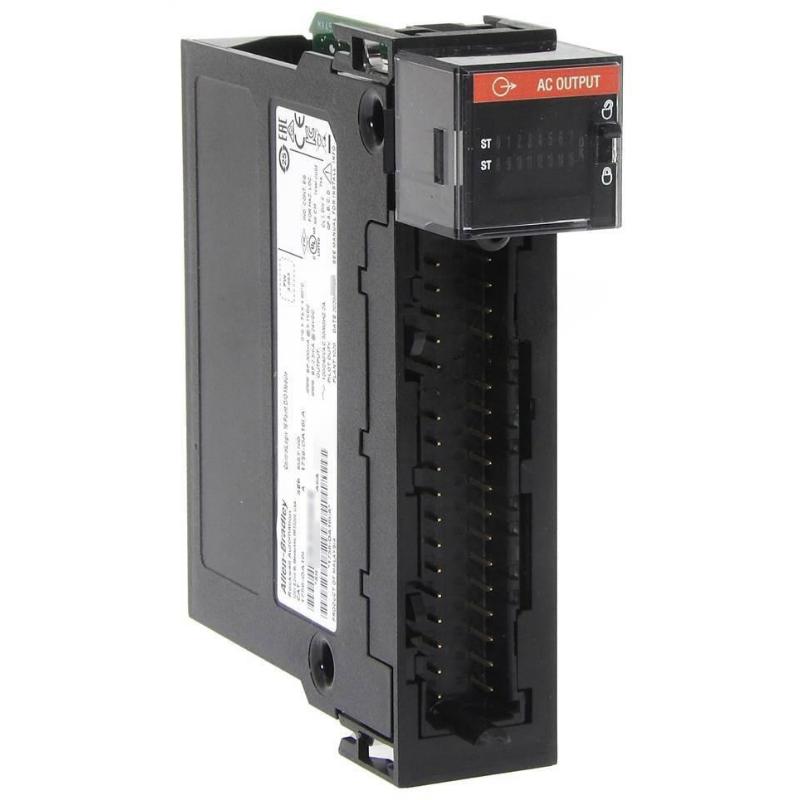
<h2>1756-OA16I AC Output Failure Causes in Industrial Environments</h2>
Based on field failure analysis, root causes typically fall into three categories:
1. Missing or incorrect field AC supply
Most common issue. The module switches load side only—no supply = no output behavior.
2. Triac leakage or overload stress
When loads exceed recommended current, triac degradation occurs gradually, not instantly.
3. Wiring-induced backfeed or cross coupling
Loose neutral or shared return wiring can cause phantom voltage behavior.
In a packaging plant, we measured 38–60 VAC ghost voltage on inactive outputs due to shared neutral wiring errors.
<h2>1756-OA16I Fault Diagnosis Using Field Signal Testing</h2>
Effective diagnostic sequence:
Measure AC voltage at RTB output terminal under ON command
Check load continuity (ohm test disconnected from PLC)
Verify isolation between channels
Inspect for neutral floating conditions
A key engineering observation:
If voltage exists at module output but load does not activate, the issue is downstream load circuit, not PLC module.
<h2>Case Study: Intermittent Conveyor Stop Fault in ControlLogix System</h2>
Observation
Output channel randomly dropped during production
No PLC fault logged
Restart temporarily restored function
Diagnostics
We observed:
Output voltage fluctuating between 0–240 VAC
RTB connector slightly oxidized
Vibration level in cabinet measured at ~8 mm/s
Root Cause
Mechanical loosening of RTB terminal causing intermittent arc interruption under load
Recovery Action
Re-terminated all affected output channels
Applied torque re-verification procedure
Added vibration-resistant locking strategy
Result
Fault eliminated completely
Output stability restored under continuous 16-hour operation
<h2>ControlLogix 1756-OA16I Overheating and Output Degradation</h2>
In high-density ControlLogix racks, heat accumulation can impact triac performance.
Field measurement example:
Ambient cabinet temp: 52°C
Output failure rate increased after 3 hours operation
After ventilation correction: failures dropped to zero
Thermal stress does not immediately destroy outputs but causes delayed switching instability.
<h2>Final Troubleshooting Logic for 1756-OA16I AC Output Module</h2>
When diagnosing faults, engineers should follow this logic:
If PLC output bit = ON but no voltage → check field power
If voltage present but no load response → check wiring/load
If multiple channels fail → check power distribution
If intermittent failure → check RTB + vibration + heat
This layered approach is far more effective than replacing the module immediately.