Honeywell’s Sun Jianneng: Digitalization and Intelligence Are Mandatory for Manufacturing and Energy
Time:2026-06-29 Browse: 19
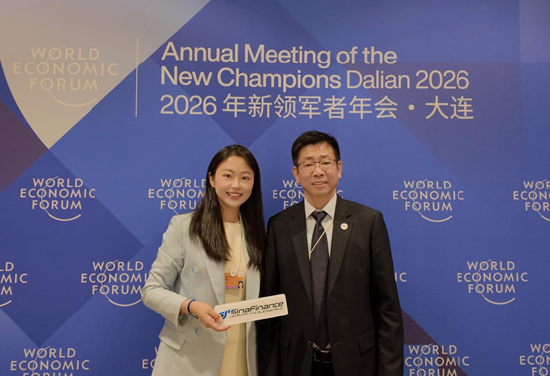
Dalian, China, June 2026 — At the 17th Annual Meeting of the New Champions (Summer Davos Forum 2026) held in Dalian from June 23 to 25, Sun Jianneng, Vice President and General Manager of Honeywell Process Technologies China, emphasized that digitalization and intelligent transformation have become essential requirements for all manufacturing and energy enterprises.
Speaking in an interview with Sina Finance, Sun highlighted that achieving large-scale industrial innovation requires the coordinated development of market demand, technological maturity, and sustainability frameworks.
Large-Scale Innovation Requires Market, Technology, and Talent Alignment
This year’s Summer Davos theme, “Scaling Innovation,” focuses on moving beyond laboratory-level breakthroughs toward industrial-scale deployment. Sun noted that true large-scale innovation depends on four critical pillars.
“The first foundation of scalable innovation is a strong market base. Stable and large downstream demand is essential to support R&D investment, technological iteration, and commercialization,” Sun said.
The second factor is technological reproducibility. Laboratory prototypes alone are insufficient; industrial solutions must be standardized and capable of mass deployment after long-term validation.
The third requirement is sustainability compliance. As global environmental regulations continue to tighten, any technology that fails to meet low-carbon and environmental standards will struggle to achieve long-term scalability.
The fourth pillar is talent supply. High-level engineers and technical experts remain the backbone of industrial expansion and innovation deployment.
China Positioned as a Key Hub for Scalable Innovation
Sun emphasized that China offers one of the most favorable environments globally for scaling industrial innovation.
He pointed to the country’s strong engineering talent pipeline, with millions of university graduates and nearly one million master’s and PhD-level professionals entering the workforce annually. Combined with China’s massive domestic market, these conditions provide a strong foundation for rapid technology commercialization, iteration, and industrialization.
SAF Scale-Up Challenge: Path Toward Price Parity by 2040
Sun also addressed the global challenge of scaling sustainable aviation fuel (SAF), noting that current SAF prices are typically two to three times higher than conventional jet fuel, creating a significant “green premium” barrier.
According to estimates from the International Air Transport Association (IATA), SAF production is expected to account for only 0.8% of total aviation fuel consumption in 2026, far below the 2050 target of 65% blending.
Sun stated that while policy-driven mandates and carbon pricing mechanisms are necessary in the short term, long-term scalability depends on technology advancement and capacity expansion.
Feedstock stability remains a key bottleneck. Waste cooking oil-based SAF production, while mature, faces challenges such as contamination and supply inconsistency, requiring stronger regulatory oversight and supply chain governance.
He projected that SAF could reach price parity with conventional jet fuel around 2040, assuming continued technological progress and industrial scaling. Without significant cost reduction, aviation competitiveness against alternative transport modes such as high-speed rail will remain limited.
Honeywell SAF Technology and Industrial Deployment
Sun noted that Honeywell has developed multiple scalable SAF production pathways.
One major route converts waste cooking oil into SAF using Honeywell’s Ecofining™ technology, which is already deployed in one of China’s largest commercial SAF facilities. The plant processes approximately 10,000 barrels of waste oil per day, with an annual production capacity of around 500,000 tons of SAF.
Another pathway utilizes agricultural residues such as straw to produce methanol or ethanol, which can then be converted into SAF. This solution is particularly suitable for resource-rich agricultural regions in Northeast China.
Green Hydrogen Scaling Depends on Cross-Regional Integration
Beyond SAF, Sun highlighted green hydrogen as another key low-carbon energy vector facing commercialization challenges.
The core issue lies in regional imbalance: renewable-rich western and northern China have abundant green electricity but limited local demand, while eastern industrial regions require low-carbon feedstocks but lack affordable renewable energy supply.
He emphasized that solving this mismatch requires integrated cross-regional industrial chains. Technologies enabling the conversion of green hydrogen into green methanol and SAF can help build a full “green electricity → green hydrogen → green fuels” value chain.
Refining Industry Enters Structural Transformation Phase
Sun also noted that China’s refining and petrochemical industry is undergoing a structural turning point as domestic fuel demand peaks.
He explained that the industry is shifting from capacity-driven growth to value-driven development, focusing on process optimization, digital operations, and high-value product portfolios.
With electrification trends accelerating and geopolitical factors affecting crude oil supply stability, blind capacity expansion is no longer viable. Instead, the future lies in “less fuel, more chemicals, and higher-value materials,” aligning with broader industry strategies of upgrading product structures and improving margins.